

VW T5.1 Sliding Door Repair for Faulty Twin Doors
VW T5.1 Twin Sliding Doors Diagnostics and Repair
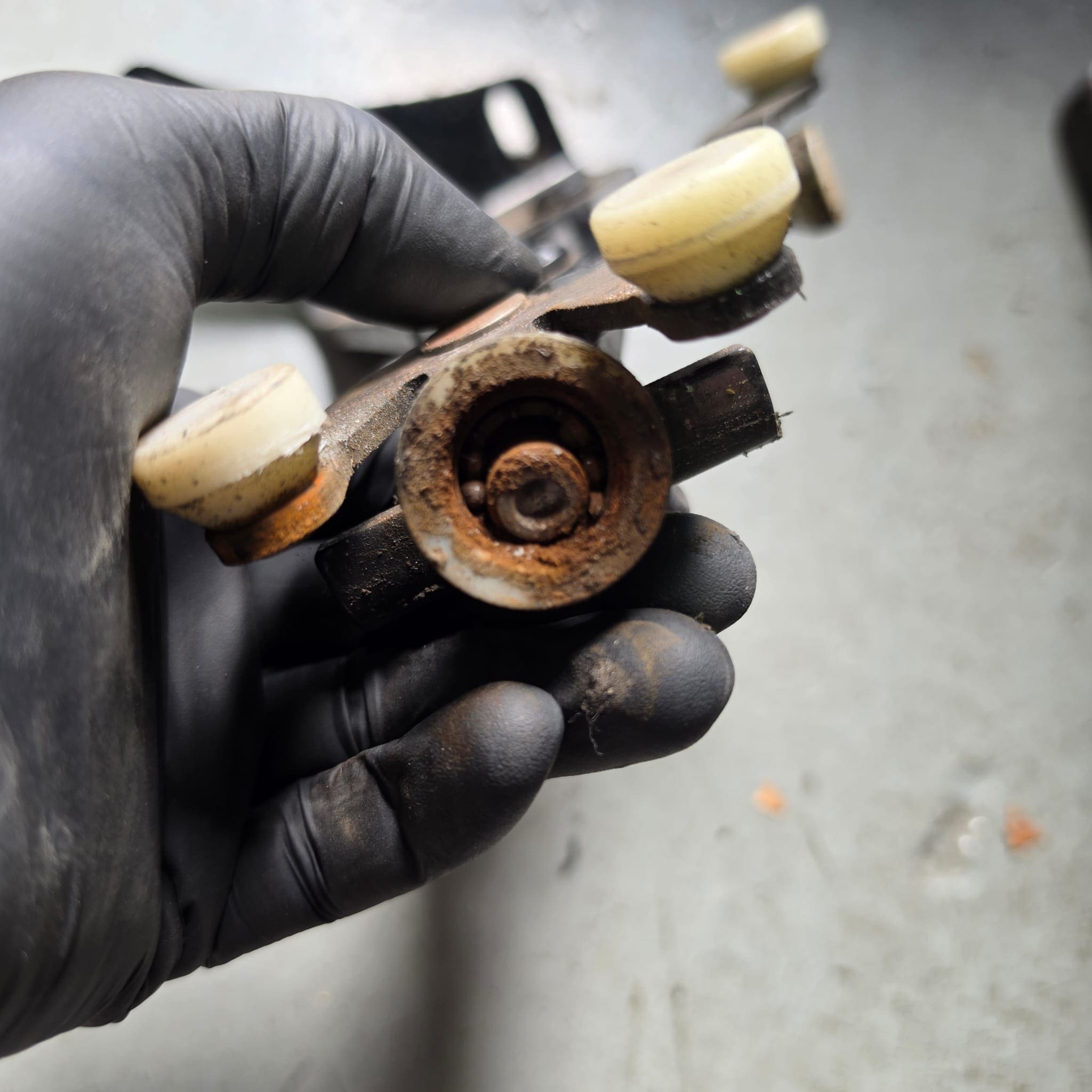
Automatic doors can do a surprising amount of damage when the hardware underneath starts to fail, and this VW T5.1 sliding door repair job showed exactly why. This van came in with twin automatic sliding doors that were not working properly, and our investigation found damaged, rusted, and partly missing bottom rollers on both sides, along with damage to the body and guide rails that now also need repair and repainting.
Have you ever noticed a sliding door starting to drag, clunk, or move awkwardly and thought it could wait? In cases like this, leaving it too long can turn a roller issue into body, rail, and rust repair work as the door keeps moving against parts that are no longer being supported properly.
What came in
This job involved a VW T5.1 with twin automatic sliding doors that were not operating as they should. The customer needed fault finding first, so we investigated the cause rather than guessing at parts.
Once inspected, both sliding doors were found to need new bottom rollers. The existing rollers were damaged and rusted, and some rollers were missing altogether, which explains why the doors had started causing further damage as they moved.
What we found
The main issue was not limited to poor door operation. Because the rollers were worn out, corroded, or missing, the movement of the doors had started affecting the van itself.
Both the vehicle body and the guide rails now need repair because of that damage. As part of the required work, rust needs to be removed, the affected areas need to be taken back to bare metal, and the repaired sections then need repainting.
- Diagnostics on twin automatic sliding door operation
- Inspection of both bottom roller assemblies
- Identification of damaged and rusted rollers
- Confirmation that some rollers were missing
- Assessment of damage to body and guide rail areas
- Repair plan for rust removal, bare metal prep, and repainting
How we approached it
This was a practical diagnostics and repair case rather than a simple parts swap. Because it is a VW platform job, it also sits naturally alongside the kind of fault tracing and mechanical problem-solving often seen in vag retrofits, even though the issue here was with the sliding door hardware rather than an upgrade.
- Checked the reported problem with the automatic sliding doors not working properly.
- Inspected both sliding door lower areas to identify the cause of the poor operation.
- Found that both doors need new bottom rollers because the originals were damaged and rusted.
- Confirmed that some rollers were missing, which had allowed extra movement and contact damage.
- Assessed the resulting wear and damage to the body and guide rails.
- Set out the repair needs, including rust removal, taking affected areas back to bare metal, and repainting after repair.
Although this was not one of our usual vag retrofits, the same careful approach matters: diagnose properly first, then repair the real cause before more damage builds up.
What we verified
We verified the cause of the door problem rather than treating it as a vague operating fault. Both sliding doors were confirmed to need new bottom rollers, and the inspection also showed body and guide rail damage linked to the failed and missing roller components.
That matters because it changes the job from a simple adjustment into a broader VW T5.1 sliding door repair plan. In other words, the fault was traced to worn and missing hardware, and the additional corrosion and metalwork issues were identified for proper repair.
Quick FAQ
Q: What vehicle was this job carried out on?
A: This was a VW T5.1 with twin automatic sliding doors.
Q: What parts were found to be faulty?
A: Both sliding doors need new bottom rollers because the old ones were damaged, rusted, and in some places missing.
Q: Did the fault damage anything else?
A: Yes. The vehicle body and guide rails also need repair because the missing rollers allowed the doors to cause further damage as they moved.
Q: Does this kind of job involve coding or warning light work?
A: No coding or warning light issues were specified for this job. The focus here was fault finding, diagnosis, and mechanical repair planning.
Q: What should I send when asking about a quote?
A: Send your vehicle details and a short description of how the sliding door is behaving, especially if you need help with VW T5.1 sliding door repair or door fault diagnosis.
Need help next
If your sliding door has started moving badly, making noise, or looking uneven, it is worth getting it checked before the van starts damaging itself further. You can also explore more of our project work if you want to see how we approach diagnostics, repairs, and other vehicle jobs in a practical way.
Customers travel in for diagnostic and repair work from places such as Redditch, Birmingham, Leicester, London, Leeds, and Manchester, especially when a proper inspection is needed before parts are ordered. If you are dealing with a similar fault, get in touch and ask about fault finding, diagnosis, and VW T5.1 sliding door repair.
📍 Professional Retrofits Limited
🏠 Unit 9, Station Rd, Higham on the Hill, Nuneaton, CV13 6AG
Follow us on Social Media:
🔵 Facebook
📸 Instagram
▶️ YouTube
Relevant Links: